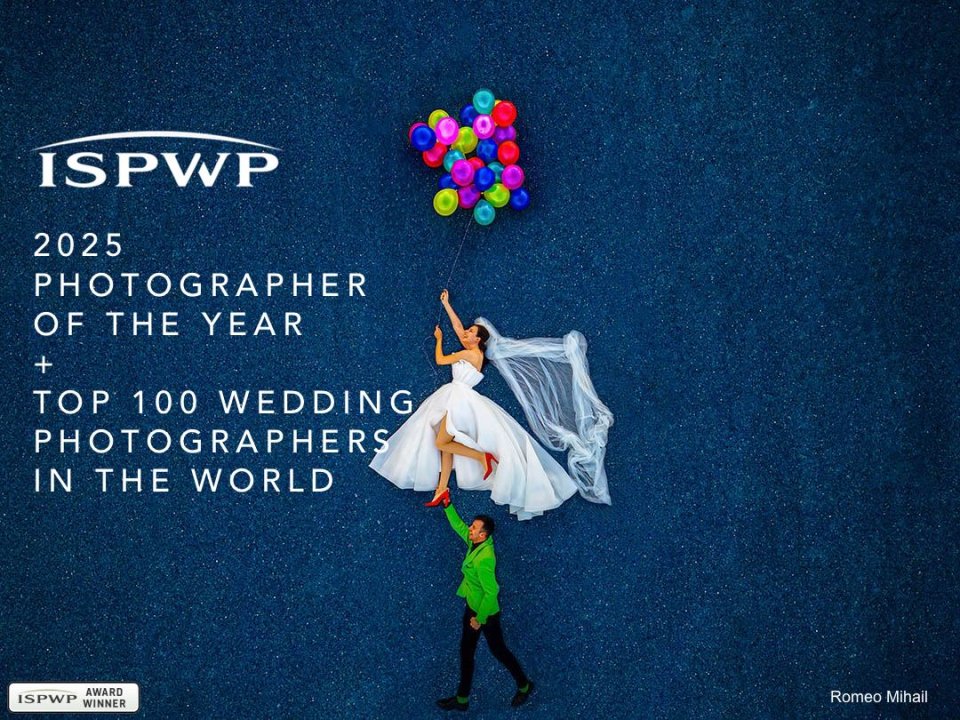
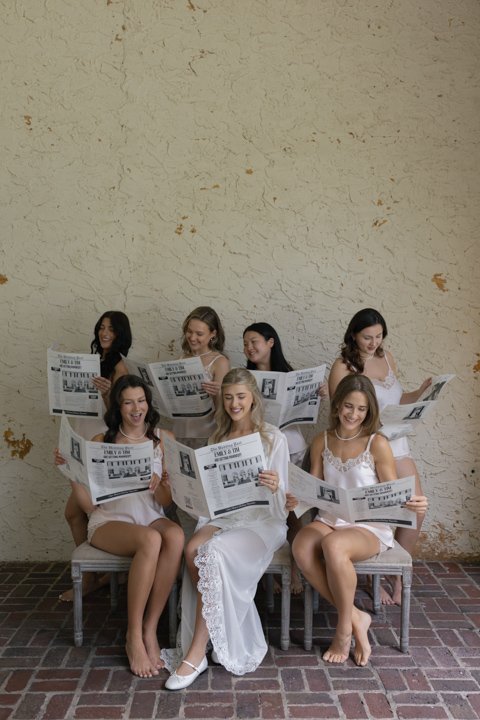
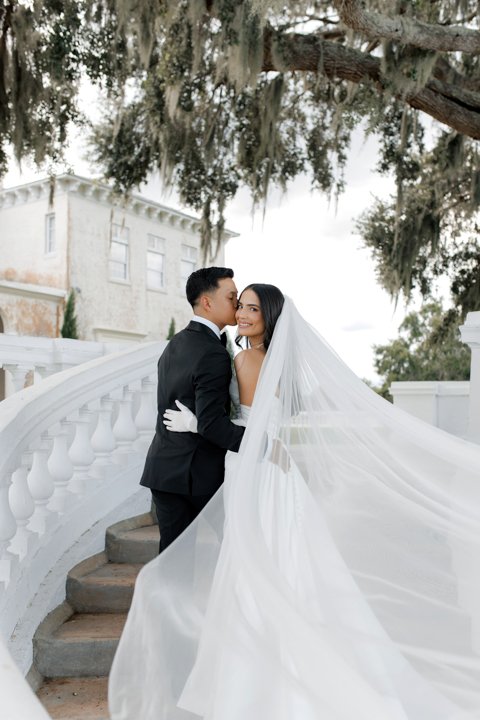
The results of the Q2 2008 Photo Contest are in! Thanks again to our fantastic judges and all photographers who submitted their images.

To view the contest results to go http://www.ispwp.com/contest2008q2

Stay tuned for news of the Q3 contest which will be opening up to accept entries in early September.

by Kim Bednarski Anderson

Say it’s your wedding day. You’ve hired a top notch photojournalistic photographer; someone whose work spoke to you in the un-posed emotional moments you saw in their portfolio. You want your wedding photos to represent the story of the day with minimal posing and prompting from the photographer, you want the real life stuff, and not the cheesy bridesmaid’s bouquets on the train from the 1980’s. You want to live your day, not spend it posing and mugging for the camera and have your photos represent the love and emotion that you felt on your wedding day. You’ve hired a wedding photojournalist, and I am proud to say that’s what I do. My clients hire me for my unobtrusive, “fly on the wall” coverage. Certainly, the style is not for everyone; if you visualize your wedding photography to be full of glamorous and romantic “fashion-y” type photos then you would not hire a wedding photojournalist.

If this sounds like what you envision for your wedding photographer then congratulations, you are my perfect client. So why oh why, my perfect client, do you hire a videographer who does this?

Videographer

Not exactly “unobtrusive” would you say? Notice that the location where he is standing could be directly blocking the view of family members in the front row. As was his style, the videographer wanted to stage everything and recreate things. This caused some stress to the bride and groom, who were unaware of the style of this videographer before they hired him. They had assumed that all videographers were pretty much the same, and having him follow them around “paparazzi-like” was not at all what they wanted which caused some awkward exchanges between them and the videographer. He later grumbled to me “I don’t even know why they hired me; they won’t let me do my job!” It was simply a mismatch of his style and how they wanted their wedding day to be captured.

If you are considering hiring a videographer, here is some advice. Find out how the videographer works and ask to see a demo of their work to get an idea if they are the right vendor for you. Ask questions! Find out how they conduct themselves during the ceremony as far as where they stand, what kind of equipment will be setup (tripods, lights, etc.), how they capture the audio, and if they like to setup and recreate scenes in order to get different angles. Ask your photographer for recommendations of videographers they have worked with and who’s style they know to be complementary. Ask the videographer for references of former clients that you can contact to find out how they liked working with the videographer and how their video turned out.

Ideally, your vendors should work together seamlessly on your wedding day. It’s why you hire professionals, so that you can enjoy your wedding day and leave the details of capturing the moments to us.

Kim Bednarski Anderson has been delivering documentary style wedding photography in Wisconsin and the surrounding area since 1996.

By Jen Capone 

As I pull out my client’s charts and review their information, I immediately form an image in my mind about the Time.  I think visually. Time becomes a shape, and the shape of the client’s day, and all the things that need to fit into it, begins to morph. This might be an odd concept for you. Let me try to explain how I particularly see time on a wedding day. Not every photographer thinks this way, that would be scary. But we do have a subliminal list of things that we anticipate, and these things are what add or subtract time to a realistic photography schedule.

I begin while the bride prepares. I ask who is doing the hair and make-up. And who else is getting their hair done at the same time. And do we know this person? And is there enough time?  I don’t usually ask what the back of the dress looks like or if they have practiced getting dressed. However, I do ask what time they believe the dress will go on. Then I will already have mapped out how long it takes to get from here to the ceremony location. Then there’s some wedding algebra about how many bridesmaids there are, which determines how many bags there are to carry, how many elevators will need to be used, and how many times someone will stop to look in the mirror to check their lipstick. Not to mention how many phone calls those bridesmaids will make to their dates or husbands about getting something that they forgot.  These are the things that I subconsciously have in my mind. I use them to edify my client’s choice or to suggest a different time to put on the dress. Here, Time is a sphere that gets bigger or smaller according to when we need to leave.

Sometimes it’s easier to get ready at the same place where the ceremony will be. But not always. Once, I was photographing a beautiful wedding where the bride was preparing in a room overlooking the ceremony location. She watched all the guests be seated while the make-up was going on. Her noon wedding? Her make-up was done at 12:15. No one panicked. It was fantastic. But that’s not ideal for everyone. Sometimes a little panic keeps things on schedule.  She knew her comfort zone and planned to it.

The ceremony. Getting out of a limo and into a building without being seen is not always easy. A big white dress is not stealthy, nor is it the attire of choice for any ninja. You will be seen by someone. They will be someone you love. We know this because it’s your wedding and most of the people there were invited by you. However, keep moving. Smile, wave, and go compose yourself. It’s zero hour.  Here, Time is a funnel.

I love ceremonies. The rush, the preparation, the anxiety all brings us to this moment when nothing else needs to be done.  Here is where I know that I don’t have to watch the clock. Catholic mass? 1 hour. Protestant? 20-30 minutes. Jewish? Ketubah + 20 minutes. Quaker? 10 minutes. Indian? Then it depends and we talk about that. But I know that this is where time is on my side. No one has to go anywhere. We’re already here. Time is a snow globe.  It’s been shaken. The glitter is settling while it sits peacefully.

This brings me to the delightful chaos of what happens next. The receiving line. This can be my biggest variable. I base my advice here on what my client wants later. Are we going to the art museum for photography? Do we have lots of driving to get to the reception? Are you going to be at your cocktail hour or are we using the time for photography?  Does everyone know where we’re going? Is there a parent or grandparent that needs assistance with ambulation?

I had a receiving line. And I’m glad. However, we had lots of time until the cocktail hour. That was in 1993.

If you have a line, here’s my advice. You can kiss and shake hands, receive a blessing, give directions, and introduce 3 people per minute to your parents and new spouse. If 100 people came to the ceremony, that’s about half an hour.  Enjoy this half hour and receive all the love that your guests want to give you, hence the “receiving”. Shine. But keep it moving. You’ll see them at cocktail. Here, Time is a long tube full of small things, with fringe at the end.

If you are having your formal photos done where the ceremony was, gather your troops. Enlist the help of your bridal party. Get yourself and your spouse to the place where the photos will be.

Oh wait. Did your guests leave for the reception? Are they still lingering? Many times, if they don’t throw something at you, they don’t know that they can leave. It’s some sort of psychology that happens. They need an event that tells them that this chapter of the day has finished and that it’s polite and acceptable to move on. If you exit and get into a car/limo/carriage for a ride around the block… know that this will take 20 minutes. It always does. I usually suggest that you exit, wave, smooch, wave, and walk back to where photos will be without conversing, except to grab parents and family members. Time looks like a blender here. Ever try to blend something and then you check it, blend some more, check again, blend a little more? That’s this. We’re done, we’re not, we are. Then there’s one more thing.

Ok now, we’re where the photos will be. Is everyone here? Who’s on a smoke break? Potty break? Does everyone have their flowers? Are all parents behaving civil? (This could be a whole other article based on my own parents). This is when I, mild mannered photographer, go into a mode that I reserve for group photos. I’m never mean. But I like to keep us on schedule. No one wants to be here all day. There’s a reception waiting. And yet, even with this desire to get to a party, not everyone is willing to move very fast.  I try to be over organized for this moment. Step parents? Dates of siblings? Grandmothers who aren’t stable on the steps?  Young ring bearers and flower girls who aren’t hip to your agenda? The aunt who insists on 6 more groups? A missing groomsman? These are a few of the happy things that I add “buffer time” for on the schedule.  I don’t need to mention these to you when we are making the time line.  These are some of the variables that I know can happen. They change the shape of what Time looks like.  They cannot and should not be prevented. But they need their own allotment. Time is a balloon that I’m trying to put more air into without letting it pop.

Now you want to go to a park. And you should. Let’s say that it’s 20 minutes away. And 8-12 members of the bridal party are coming. And parents. I’m going to ask you if you want photos of parents here as well. You might. And if you want them, you should have them. Please give me more than 20 minutes at the park. Here’s the variables that I think about: mud, parking, someone forgets something, parents start to bicker, the guys all bring their drinks with them and have to run them back, goose poop. This is where the time goes.  Time also disappears if the limo driver decides to explore or has to move and can’t come back as fast as we hoped. This doesn’t happen often. But it did happen April 19th. The trolley driver had to move and we sent a groomsman to go find him. We skipped the next location. And this was ok because we got to the cocktail hour where everyone was happy and relaxed and that’s it. We were there. There was no where else to go. The catering manager took it from there. I passed my baton to the next professional.

Now I can find you enjoying your wedding, the details, the conversations, the formalities. They all flow gracefully into each other with the simple announcement of a band leader or a DJ. The shape of Time is now less lumpy in my mind. It’s a continuous wave of tradition that allows me to find the moments that will occur. It’s like radar to an air traffic controller; you’ve been in my airspace, now you’re in the caterer’s space. You’re the plane that I was directing until I delivered you to the next area. I can still see you and communicate with you. But you’re in someone else’s hands now, gliding along under the care and support of professionals that want you to have a great flight.

The idea of photography on a wedding day will differ from couple to couple, as well as with photographers. If you want to go to several places with stylized portraits like a fashion shoot, add more time.  Consider locations, driving, and traffic. Know your crowd. Be aware of your family dynamic. Listen to your professionals about a realistic time line. But above all, be happy. Be glad to be there. Love your guests. Don’t worry about all the things that I’m thinking about. Add 15 minutes to every part of the day until you get to the reception and it will all be fine.

Jen Capone

Jen Capone Photography has been serving the Philadelphia area and beyond for over a decade. She also provides wedding photography services for the Poconos, Montgomery County, Jersey, Maryland, and beyond.

Welcome new members!

Laurie Rhodes Photography
KJImages Photography
Mark Gardner Photography
Nancy Gould Photography
Jennifer Davis Photography
Valls Photographic
Hooked on Photography
Freestyle Weddings
Love Life Images
Rebekah Johnson Photography
Abby Rose Photo
dMdC Photography
Atrero Photography
Marcel & Meher Siegle Photography

Getting married is not one of those things you do everyday, well, unless you live in Hollywood. But for the rest of us, planning a wedding is unfamiliar territory. How often do you plan parties for 100, 200, 300 people or more? When it comes to hiring a wedding photographer, you’re entering into a strange new world of “packages,” wedding albums options, high resolution files, slideshows, and the list goes on and on.

How are you to make sense of it all and make an informed choice when hiring a photographer? When you meet your photographer, come prepared to talk about your wedding, but also know what questions to ask. Here are a list of five basic questions that every couple should ask their wedding photographer before signing on the dotted line.

1. Can I read through the contract?
The contract should at the very least describe in detail what you are getting (prints, albums, slideshows, CDs of files, hours of time, etc.), when you can expect to get it, how much it costs, when your payments are due, and what is refundable or not. If there are any terms in the contract you don’t understand, ask! If problems arise between clients and photographers it is often due to a misunderstanding of the contract terms.

2. Can I see some sample albums of complete weddings?
Every photographer should be able to show you some samples of complete weddings they have shot. If they only show you a couple of highlights from selected weddings, you won’t have a very clear idea of how your pictures will turn out. It’s quite common for photographers to show pictures from the whole day of a complete wedding, so you should see pictures of people getting ready, the ceremony itself, the formal group pictures and portraits, and the reception.

3. What kind of experience do you have?
Wedding photographers have to be able to adapt to every situation during a wedding, and they have to react instantly and with confidence because there is oftentimes no second chance. Surprise situations happen all the time at weddings, such as a bride’s reaction to seeing a long lost cousin, or the groom spontaneously picks up his bride and swings her around. If the photographer is inexperienced, those are moments that can be missed if they are not ready or not anticipating the moment. Also, the variety of photographic challenges is enormous. Some venues are dark, some lit with flourescent lights, some have mottled shade, some have constantly changing light such as a partly cloudy day. Sometimes, the photographer encouters uncomfortable situations between family members. Your photographer should be able to tell you how many weddings they have shot and describe some difficult situations they have overcome. The better photographers tend to cost more precisely because of that experience and their work should reflect it.

4. How much direction or posing do you do during the day?
This question speaks to style and how you will interact with your photographer during the day. Some photographers take a strict photojournalistic approach, and don’t do any interaction or intervention during the day except for perhaps some casual posing suggestions during the formal group portrait session. Others will want to spend a lot of time with you and prompt you to twirl, dip, kiss, etc. and guide you through a number of poses. They may also take control at certain parts of the day and tell you to move into better light, or coach you on how to stand and hold the cake cutting knife. It all depends on what you want, so before meeting with your photographer, decide on how much time and control you want to give your photographer. Typically, photographers are comfortable operating in a certain way, so be sure to have them describe how they operate and see if that works for you.

5. Do you have insurance?
Professional wedding photographers should have the proper insurance for their business. This will protect them against equipment theft, but it should also provide protection in case Great Aunt Sophie trips over the photographer’s camera bag and breaks her leg. If your photographer doesn’t have insurance, it’s usually an indication that they are just starting out in the business, or they aren’t taking their business very seriously.

So there you have it, five basic questions to talk over with your photographer. The key thing to remember is, don’t be afraid to ask questions, even after you’ve signed on the dotted line.

Article submitted by Joe Milton

Over the past little while we’ve added more photographers. This is a collection of some incredible talent and we’re thrilled to have everyone on board. Welcome!
Jessica Johnston Photography   
Kristin Bednarz, photographer   
Jonathan Canlas Photography   
Monica Martin Photographer   
Sean Flanigan Photography   
Halo Photographic      
Arguedas Photography   
Dallas[in]Focus   
Sergio Photographer   
Riccis Valladares Photography   
Dino Lara Photography   
Justin Hackworth Photography   
Clau Photography   
MereMatt Studios   
In His Grace Photography   
Anna Kuperberg Photography   
Decca Photography   
Jeffrey and Julia Woods
Whitley Goodman Photography   

Photo District News is one of the most respected photography periodicals in the country. Every year they hold a wedding photography contest and six ISPWP members were winners this year!

Congratulations to:

Teresa McKenzie (Portraits by Teresa Photography):
wedding photo

Bill Holland (Holland Photo Arts):
Virginia wedding photographers | Holland Photo Arts

Kim Bednarski (KB Image Photography):
Wisconsin wedding photographers | KB Image Photography

Marc Climie (Climie + Co. Photographers):
Georgia wedding photographers | Climie + Co

Laurie Rhodes (Laurie Rhodes Photography)
New York wedding photographers | Laurie Rhodes Photography

Anna Kuperberg (Anna Kuperberg Photography)
California wedding photographers | Anna Kuperberg Photography

For the full contest results go here. Way to go you guys!

The big news from the ISPWP Headquarters is that the site is now officially live! We are now accepting applications and look forward to welcoming new members.

Many thanks to all the testers and early adopters for signing up and for providing valuable feedback on the site. Feel free to tell your photographer friends and neighbors who might be interested in joining. We’ve got big things planned so stay tuned!

JP and Amy Prutch - AJ’s Studio 
Tyler Wirken - Tyler Wirken Photography 
Michael Cody - Michael Cody 
Jamie Owens - J. Scott Photography 
Audra Colpitts - Audra’s Photography 
Mike Dickson - Photos for Life 
Antonio Pulsone - Antonio Pulsone, Photographer 
Teresa McKenzie - Portraits by Teresa Photography 
Erin Antognoli - Erin Antognoli 
Joe Dallas - jk Dallas Photography 
Hassel Weems - Hassel Weems Photography 
Ashley Langford - Ashley Langford Photography 
Kristin Reimer - Photomuse 
Michael Leslie - Michael Leslie Photography 
Craig Mitchelldyer - Mitchelldyer Photography 
Lori Brown - Mystique Photography 
Ulysses Ashton - Ulysses Photography 

The ISPWP staff has returned and luckily Las Vegas didn’t take too much of our money. The WPPI tradeshow seemed to be more crowded this year than ever, but it was still great to meet so many photographers and see all of the new products being offered.

I’ll be implementing a few ideas that I gleaned from the recent survey into the ISPWP site and then I’ll announce the official opening on March 31. At that point, the site will be open for membership applications and we’ll start to make some headway with promotion and search engine placement. We’re getting close!